
The Origins and Evolution of Halloween: A Journey Through Time
Related Articles: The Origins and Evolution of Halloween: A Journey Through Time
- Best Time To Experience Halloween Horror Nights 2024: A Comprehensive Guide
- Alexa, How Many More Days Until Halloween 2024?
- 2024 Google Doodle Halloween: How To Play
- 31 Days Of Halloween 2024: A Spine-Tingling Journey Into The Spooky Season
- Google Doodle Halloween Video 2024: A Spine-Tingling Adventure Through The Spooky Shadows
Introduction
In this auspicious occasion, we are delighted to delve into the intriguing topic related to The Origins and Evolution of Halloween: A Journey Through Time. Let’s weave interesting information and offer fresh perspectives to the readers.
Table of Content
Video about The Origins and Evolution of Halloween: A Journey Through Time
The Origins and Evolution of Halloween: A Journey Through Time
Introduction
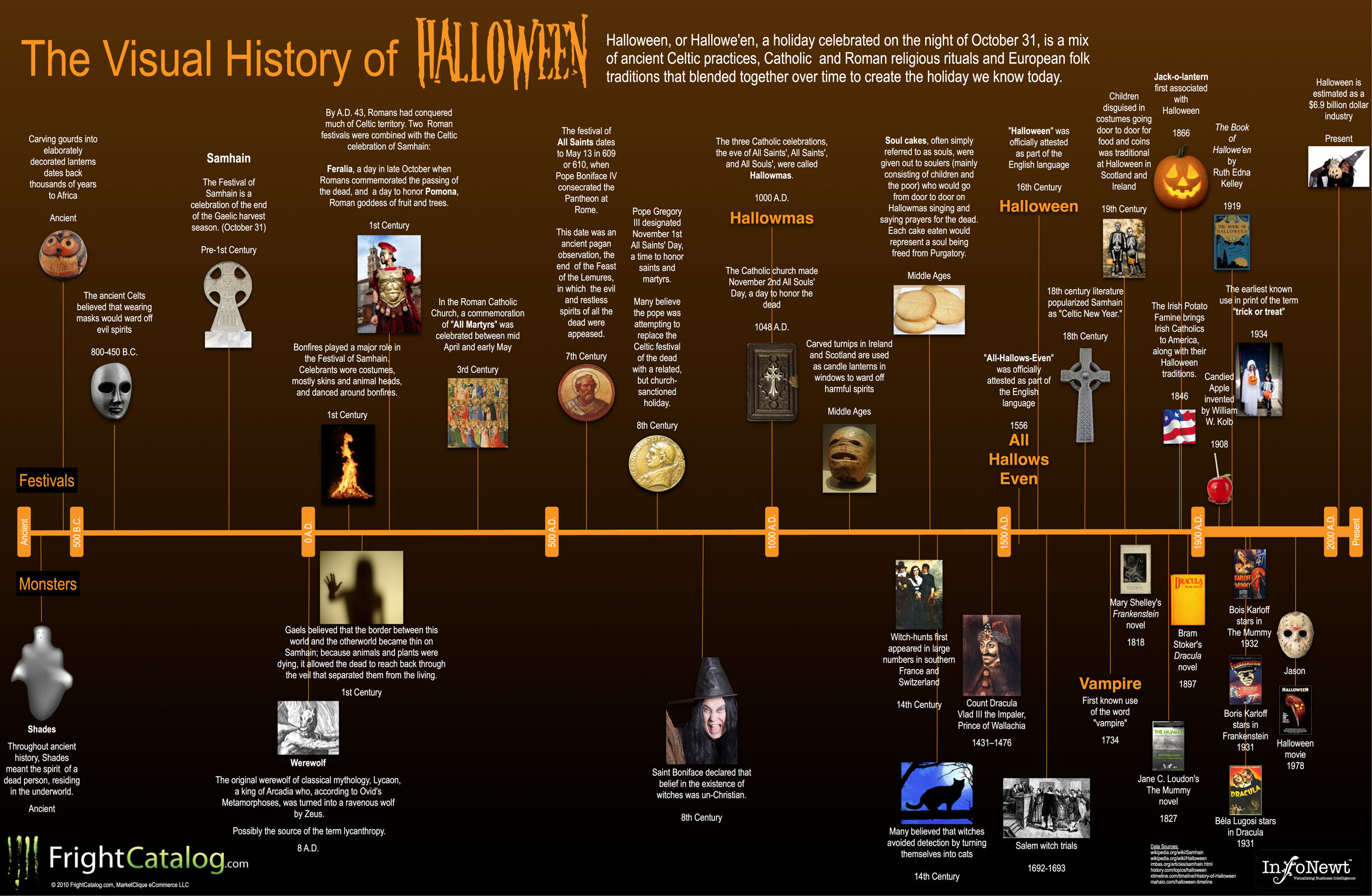
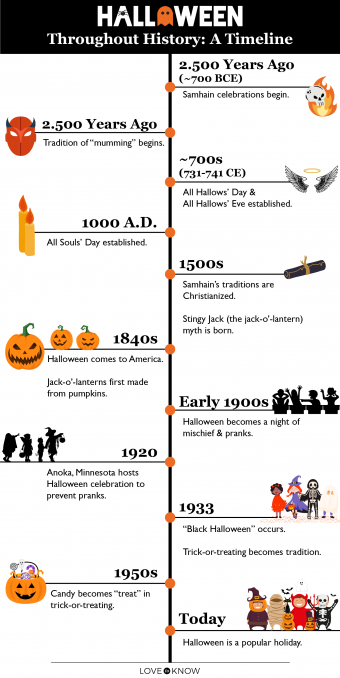
Halloween, a festival celebrated annually on October 31st, holds a significant place in Western culture, marked by its unique blend of ancient traditions, folklore, and modern-day festivities. Its roots can be traced back centuries, intertwining with Celtic, Roman, and Christian influences to create the vibrant celebration we know today. This article delves into the rich history of Halloween, exploring its origins and the fascinating journey it has undergone over the centuries.
Celtic Origins: Samhain and the Veil Between Worlds
The origins of Halloween can be traced back to the ancient Celtic festival of Samhain, celebrated by the Celts, who inhabited what is now Ireland, Britain, and northern France. Samhain, meaning "summer’s end," marked the transition from the light half of the year to the dark half, and was believed to be a time when the boundary between the worlds of the living and the dead became blurred.
During Samhain, the Celts believed that the spirits of the dead returned to earth, seeking to reconnect with their living relatives. To honor and appease these spirits, the Celts celebrated with bonfires, feasts, and sacrifices. They also wore costumes made of animal skins and heads to disguise themselves from the spirits and protect themselves from harm.
Roman Influence: Feralia and Pomona
In the 1st century AD, the Romans conquered the Celtic lands, bringing with them their own religious festivals and customs. Two Roman festivals, Feralia and Pomona, held in October, gradually blended with Samhain, further shaping the emerging Halloween traditions.
Feralia, celebrated on October 21st, honored the dead and involved offerings of food and flowers at gravesites. Pomona, celebrated on October 13th, was a festival dedicated to Pomona, the goddess of fruit trees. Over time, elements of these Roman festivals, such as honoring the dead and feasting, were incorporated into the Celtic celebration of Samhain.
Christianization: All Saints’ Day and All Souls’ Day
With the spread of Christianity throughout Europe in the Middle Ages, the Catholic Church sought to Christianize pagan festivals, including Samhain. In the 8th century, Pope Gregory IV designated November 1st as All Saints’ Day, a day to honor all Christian saints. The following day, November 2nd, became All Souls’ Day, dedicated to praying for the souls of the dead.
Over time, the traditions associated with Samhain gradually merged with All Saints’ Day and All Souls’ Day, creating a unique blend of Christian and pagan elements. The name "Halloween" itself is a contraction of "All Hallows’ Eve," the evening before All Saints’ Day.
Medieval Halloween: Witchcraft, Ghosts, and Supernatural Beliefs
During the Middle Ages, Halloween became associated with witchcraft and the supernatural. The belief in witches and demons was widespread, and it was thought that they were particularly active on Halloween night. People often gathered around bonfires to ward off evil spirits and protect themselves from harm.
The practice of trick-or-treating also emerged during this period. Children would go from house to house, reciting verses or singing songs in exchange for food or money. This tradition was believed to appease the spirits of the dead and prevent them from causing mischief.
The Reformation and Enlightenment: A Decline in Superstitions
The Reformation in the 16th century and the Enlightenment in the 18th century led to a decline in superstitious beliefs and practices associated with Halloween. However, the festival continued to be celebrated, albeit with a more secular focus.
In the 19th century, Irish and Scottish immigrants brought their Halloween traditions to North America, where they gained popularity and became an integral part of American culture. Over time, Halloween evolved into a more lighthearted and family-friendly celebration, with a focus on costumes, candy, and festive decorations.
Modern Halloween: Commercialization and Global Reach
In the 20th and 21st centuries, Halloween has become increasingly commercialized, with a wide range of products, costumes, and decorations available. The festival has also gained global reach, celebrated in countries around the world, each with its own unique interpretations and traditions.
Conclusion
Halloween, with its rich and diverse history, is a testament to the enduring human fascination with the unknown, the supernatural, and the boundary between life and death. From its Celtic origins as Samhain to its modern-day incarnation as a global festival, Halloween has undergone a remarkable journey, evolving and adapting to the changing cultural and societal landscapes. Today, Halloween remains a vibrant and beloved celebration, a time for costumes, candy, and the exploration of the darker, more mysterious aspects of human nature.


Closure
Thus, we hope this article has provided valuable insights into The Origins and Evolution of Halloween: A Journey Through Time. We thank you for taking the time to read this article. See you in our next article!
