
A Brief History of the Origins of Halloween 2024
Related Articles: A Brief History of the Origins of Halloween 2024
- 5 Historical Facts About Halloween 2024
- Halloween Horror Nights Orlando 2024: A Spine-Chilling Extravaganza
- 2024 Google Doodle Halloween: How To Play
- Google Doodle Halloween Video 2024: A Spine-Tingling Adventure Through The Spooky Shadows
- 8 More Days Till Halloween 2024: The Countdown Begins
Introduction
With great pleasure, we will explore the intriguing topic related to A Brief History of the Origins of Halloween 2024. Let’s weave interesting information and offer fresh perspectives to the readers.
Table of Content
Video about A Brief History of the Origins of Halloween 2024
A Brief History of the Origins of Halloween 2024
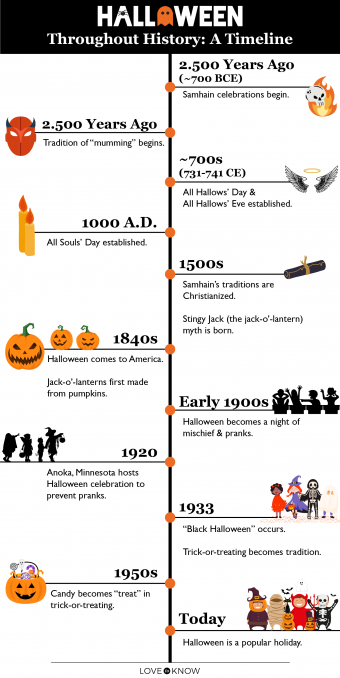
Halloween, a festival celebrated annually on October 31, has its roots in ancient Celtic traditions and has evolved over centuries into the modern-day celebration we know today. The origins of Halloween can be traced back to the ancient Celtic festival of Samhain, which was observed by the Celts, who lived in what is now Ireland, Britain, and northern France.
Origins in Celtic Culture
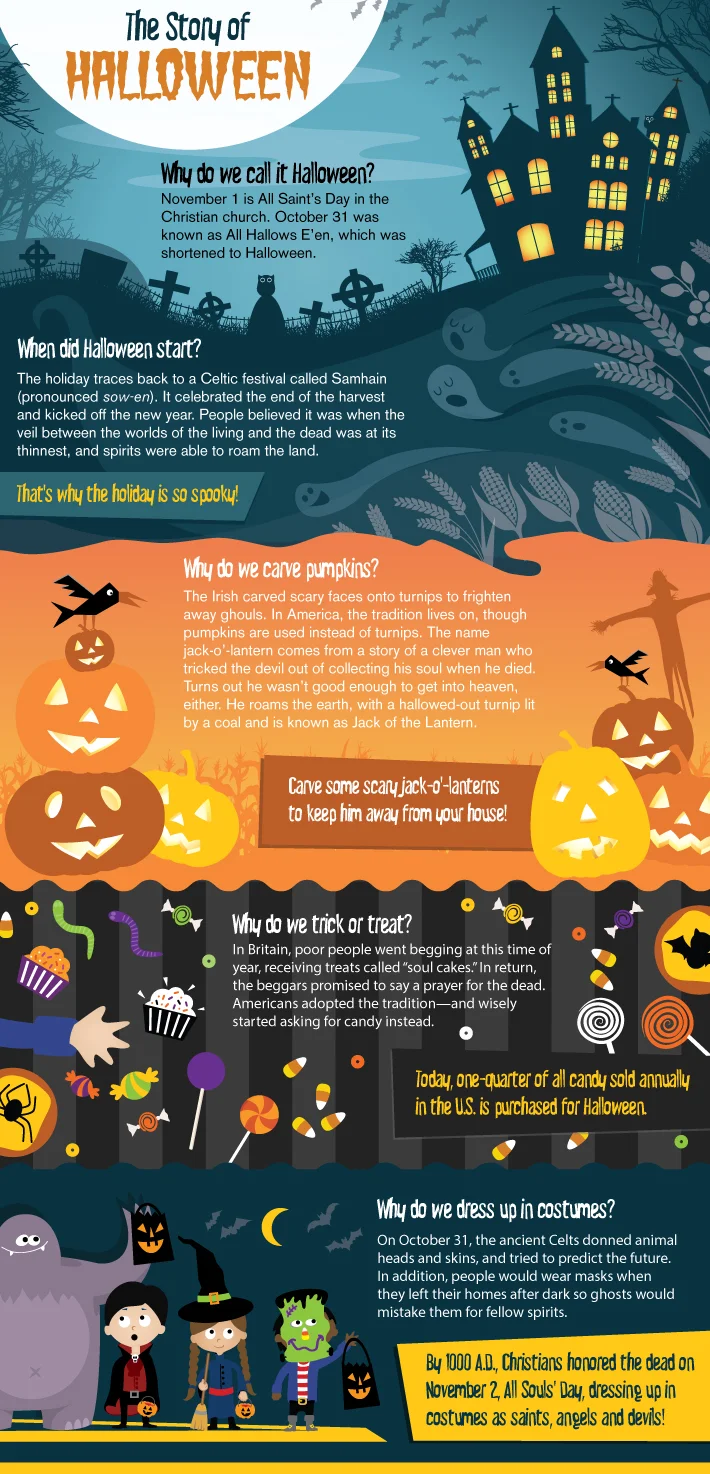
The Celts celebrated Samhain on November 1st, marking the end of the summer and the beginning of the winter season. They believed that on this night, the boundary between the worlds of the living and the dead became blurred. As a result, they celebrated with bonfires, costumes, and feasts to honor the dead and ward off evil spirits.
Roman Influence
When the Romans conquered Celtic territories in the 1st century CE, they incorporated elements of Samhain into their own festivals. The Roman festival of Feralia, which honored the dead, was celebrated around the same time as Samhain. Over time, the two festivals merged, and Samhain began to take on some Roman customs and traditions.
Christianization
In the 7th century CE, Pope Gregory IV designated November 1st as All Saints’ Day, a Christian holiday to honor all Christian saints. This led to the Christianization of Samhain, and it became known as All Hallows’ Eve, the evening before All Saints’ Day.
Medieval Traditions
During the Middle Ages, All Hallows’ Eve became associated with witchcraft and the supernatural. People believed that on this night, witches and evil spirits roamed the earth, and they would dress up in costumes and light bonfires to ward them off. The practice of trick-or-treating also emerged during this time, as children would go door-to-door asking for food and treats in exchange for prayers for the dead.
Modern Halloween
In the 19th century, Halloween was brought to the United States by Irish and Scottish immigrants. It quickly gained popularity and became a widely celebrated holiday. Over time, Halloween has evolved into a secular holiday focused on costumes, candy, and trick-or-treating.
Halloween 2024
Halloween 2024 will fall on a Thursday. While the specific traditions and celebrations may vary from place to place, some common activities include:
- Trick-or-treating: Children dress up in costumes and go door-to-door asking for candy and treats.
- Costume parties: Adults and children alike attend parties where they dress up in elaborate or humorous costumes.
- Bonfires: Bonfires are lit to symbolize the warding off of evil spirits.
- Pumpkin carving: Pumpkins are carved with faces and illuminated with candles to create jack-o’-lanterns.
- Haunted houses: People visit haunted houses for a spooky and thrilling experience.
Conclusion
Halloween has a rich and diverse history that spans centuries and cultures. From its origins in ancient Celtic traditions to its modern-day incarnation as a secular holiday, Halloween has evolved into a beloved festival celebrated around the world. Whether you enjoy trick-or-treating, attending costume parties, or simply carving pumpkins, Halloween 2024 promises to be a fun and memorable occasion.



Closure
Thus, we hope this article has provided valuable insights into A Brief History of the Origins of Halloween 2024. We appreciate your attention to our article. See you in our next article!
